
Visibility Can Be An Illusion
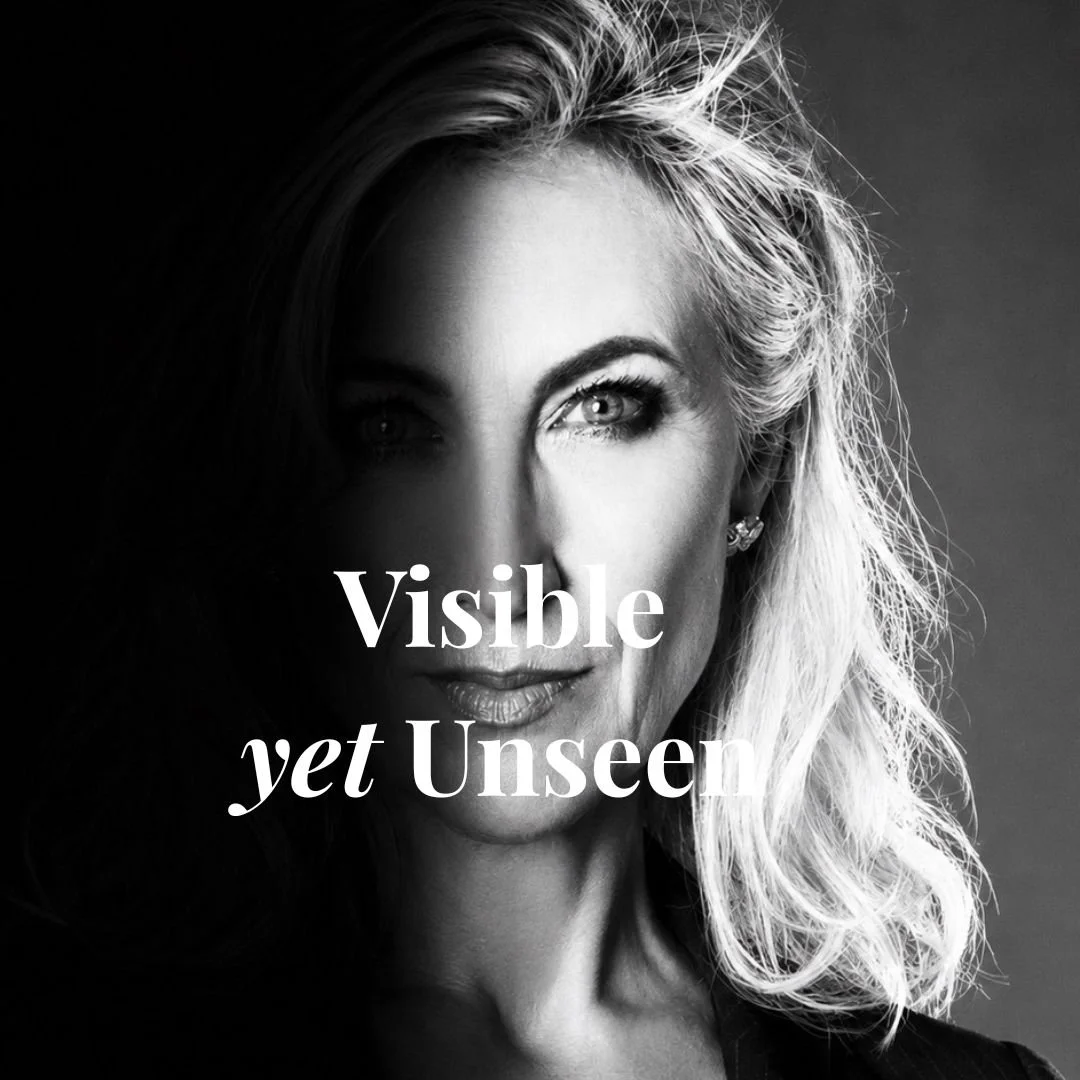
Highly Visible, Yet Completely Unseen: Activating Our Collective Authority With Gravitas
What is the true cost when senior women and female founders are visible enough to be scrutinised, but not seen enough to truly influence, be sponsored, promoted, or invested in?
Why is it that women can be in the room, on the stage, at the table and still not be truly recognised?
Why are senior women burning out behind high-performance masks, and how can we activate their true executive gravitas?
There is a relentless, exhausting conversation happening across the corporate landscape right now about women needing to be more visible.
If you are an executive woman, a female founder, or a leader navigating the boardroom, you are likely saturated with these invitations and expectations: Raise your profile -speak up more - build your personal brand - put yourself forward - have a seat at the table. Post – pitch – present - be there!
And of course, there is truth in that. In our business ecosystems, visibility creates access, builds pipelines, and opens doors. It connects a leader’s name to her output.
But let’s stop for a moment and look beyond these directives, because what I have become acutely aware of – on my own journey, and witnessed after over a decade of coaching fellow women, working inside global organisations, and hosting the Women in Business Awards, is this…
There is a profound, costly truth: Visibility is an external vanity metric; being seen is a human, strategic reality that activates your natural authority for real influence – and shows up as gravitas.
When we tell women to simply "be more visible," we are handing them an instruction manual for an external performance. We must remember that we are operating in a corporate world historically designed by men, for men.
Our default, conditioned tendency is to believe we have to alter our shape, mimic masculine dominance, or perform an exhausting version of confidence just to fit in – let alone become influential and get ahead
And, before I go any further, I want to state a clear imperative: the responsibility for what I am about to share – in my opinion - sits squarely at the intersection of organisational culture, male allyship, as well as with us as women - whether corporate leaders or visionary entrepreneurs, this is not an isolated "women's issue" to be fixed in a vacuum, it is a shared ecosystem.
We each hold a piece of the problem, which means we each hold a piece of the solution. This is a collective responsibility.
The visibility lie we need to challenge
The great corporate paradox is that you can be entirely visible, yet remain completely unseen. You can occupy the highest levels of leadership, be the most prominent face in the room, and still live this frustrating reality:
You can be in the room, yet remain excluded from the real, unspoken circles of decision-making.
You can hold the title, yet still be quietly audited for trusted authority.
You can be relied upon for flawless execution, yet consistently bypassed for strategic influence.
You can be rated as a high-performer, yet subtly written off as "low-potential" for what comes next.
This is the distinction we completely miss when we buy into the visibility illusion. Visibility is merely an external metric; being seen is a human and strategic reality. Visibility means people know your title, your track record, and your bio. Being seen means they trust your judgment in a crisis, respect your earned authority, and value the deep, lived experience you bring to the table – this is where real influence happens.
Why This Matters: An Imperative for Us All
Why go down this rabbit hole?
This is not soft semantics or a minor corporate annoyance, i is a personal crisis for women, a critical commercial blind spot for businesses, and an international imperative for our collective future.
When you scale a business or pitch for funding, investors don't just invest in your data - they invest in your character, your presence, your passion and your conviction. If you are merely visible, you are forced into an exhausting cycle of over-functioning-over-preparing, over-qualifying, and over-proving your worth just to be taken seriously.
The burnout cost of being visible but unseen
Look closely at executive teams today; Senior-level women are burning out at unprecedented rates. Six in ten report frequent burnout. This isn't a pipeline problem, and it isn't an execution problem.
Women burn out when they are visible enough to be relied upon, judged, and loaded with responsibility-but not seen enough to be properly recognised, supported, sponsored, protected, or promoted.
"You aren't burning out because you can't handle the pressure. You are burning out because you are carrying a system that isn't carrying you back. You are over-functioning to prove your worth in a room that should already see it."
When an organisation fails to truly see its female leadership asset, it doesn't just lose engagement; it loses market intelligence, emotional capability, and competitive edge.
When women are visible but not truly seen, the world loses part of its universal intelligence. It loses ideas, challenge, and wisdom, earned through lived experience.
This isn’t just about organisational profit - it is about the quality of decisions shaping our workplaces, public offices, and global communities.
The Exhausting art of the self-edit
I’ll premise the following with this; – I’m not suggesting that senior women or founders lack drive or passively wait for permission - you don’t reach the upper echelons of business by standing still.
I am suggesting, that for many women, showing up fully as themselves is not as simple as "being more confident." We have learned, in thousands of tiny, insidious ways, that being fully seen is not always safe.
The result, is often, the exhausting, unconscious habit of constant self-editing. It is the invisible tax of over-thinking your delivery, softening your tone, and internally negotiating your boundaries before you even open your mouth.
To understand why we as women tend to hide behind the hyper-polished facade of over-performance, we need to look at where this conditioning comes from.
It starts early. I recently interviewed a brilliant 22-year-old university graduate. She recalled a distinct memory from nursery school when she was just four years old, she had built a structure, and the boy next to her had built one too. When the teacher walked over, the little boy was praised for his achievement. The young girl was praised for including others.
We can all join the dots to how this might manifest into adulthood. Most girls are not directly told, “Do not lead.” They are still taught to wait - wait to be chosen, wait to be asked, wait to be perfect, wait until it’s safe. Be good, nice, modest, pleasing, and accommodating -but never too much.
By the time those habits reach the executive level, they masquerade as "professionalism," "humility," or "being a team player." In reality, it is a risk-mitigation strategy driven by the fear of being labelled aggressive, difficult, or overly ambitious.
And then there are those of us whose conditioning runs even deeper. For me, at an early age, I didn't feel safe even being visible, let alone seen. As a survivor of childhood trauma and abuse, disappearing was my survival strategy, disconnecting was safe - being invisible kept me protected from a world that felt dangerous.
As I developed my career in sales though, I adapted. I learned how to perform visibility. I built a magnetic, compelling persona. I knew how to walk into a room, command an audience, and win the client. From the outside, I looked like the definition of success –projecting the ultimate executive presence - but this was all a shield - a heavy suit of armour – and beneath it, the pain, and deeper still, the real woman-her truth - her wisdom, personality, insights - and her passion- all tucked away and entirely unseen.
Wearing that mask every day was an exhausting, soul-crushing weight.
Years later, even while hosting the Women in Business Awards for many years, it was a magnificent performance. I could entertain, inspire, and engage from the stage, but I couldn't truly connect or relate because I wouldn't allow myself to be seen – and in fact didn’t know how to…
It wasn't until I was asked to step into the light and tell my own raw, unfiltered story that I understood what truly being seen meant and how I had craved it for so long – but it required courage – as that that familiar question: Who do you think you are? Echoed loudly in my head, I stepped up anyway, and in 2022, I showed up in my truth. I didn't just share my experience; I shared it with vulnerability, with a deep desire to inspire other women to do the same, and in that moment, for the very first time, I activated my natural authority. I found a new layer of confidence and connection - with myself, my audiences and with the world.
When I reflect on this, I look at the corporate landscape across the Atlantic and often hear people say, "Women in the US are so much more outgoing and visible." But I have to ask the question: Are they truly allowing themselves to be seen, or have they simply mastered a more performative, highly polished brand of shield?
No judgment, just curiosity – curious to understand the cultural differences that impact how we show up and what it means for a woman to be seen.
The proven trap: Why women buy access while men are awarded potential
To be clear here; this is not an indictment of men, I truly believe as women – some of us need to wake up to the truth of who we are - and celebrate it and stop waiting for everyone else around us to change.
We also know that men wear masks too. They hide behind the masks of bravado, status, pressure, and ego because they, too have been conditioned to believe it is unsafe to show their true selves.
But the business consequences play out entirely differently.
· A man’s defences are frequently misread by organisations as natural authority and future potential. A man can speak with absolute certainty before he has all the evidence, and the room will trust him
· A woman’s defences, however, trap her in an exhausting double bind. If she is too quiet, she is overlooked. If she is too strong, she is judged. She is required to earn authority twice: first through competence, and then through likeability.
· Compounding this, women are often judged by how they look before anyone has heard what they think - labelled as too polished, too tired, too attractive, too plain, too much, or not enough.
The aesthetic tax: When being looked at substitutes being known
Being looked at is not the same as being seen. Being looked at can objectify and judge the surface; being seen recognises and honours the whole person. When stepping into visibility, a woman must refuse to let appearance become the headline of her value, demanding instead: See my thinking, see my wisdom see my courage see my leadership.
For women - dismantling the high-performance mask: The work begins inside
This is where we must throw down a definitive behavioural challenge.
This is not about making women out to be victims - senior executives and female founders are highly accomplished, formidable leaders.
But if we want a different reality, we need a different mentality. We must flip the script of our internal narrative that keeps us safe, but stuck – safe, but unseen.
When we as women fully recognise and honour our own capabilities, we will no longer feel compelled to hide our genius under a bushel. Furthermore we will not feel the ned to over-function and over-perform to prove our worth and validate our existence. We will stop over-preparing for the boardroom, we will stop over-justifying our valuation to investors, and we will stop waiting for permission. We will claim our space, protect our boundaries, and thrive.
Executive presence is not performance – it’s alignment.
True executive presence is not an external performance trick; it is an inside job. Whether you are leading a global team through a corporate restructuring or pitching a venture capital board for a Series A funding round, presence occurs the moment your thoughts, emotions, body language, values, and voice are all in perfect alignment. When you own this internal authority, you exude an unshakeable gravitas that commands the room.
So how do we bridge this gap – from visibility to being seen – develop this true presence and access our natural authority?
We must master the immediate tactical actions of presence, and anchor them in deep self-discovery.
Before you can change how you are seen by the world, you must change how you choose to see yourself.
True presence requires moving past the illusion of surface visibility by activating my proprietary 5-Step Process for Self-Discovery™
I will soon be sharing this ultimate guide to a powerful, proven process for ‘self-determination’
This methodology is designed to shift you from exhausting over-performance to unshakeable internal authority
Watch out for a download:
As Leaders and Allies
This internal reclamation is the work of individual women, but the environment is the responsibility of both male and female leaders.
If you’re a leader, an executive team member, or a male ally, your job is not to be a "rescuer." Your job is to be a recogniser.
It is poor business practice to invite diverse female leaders to the table only to talk over them, interrupt them, or filter their ideas through the lens of their appearance.
For male allies: True allyship means using your institutional capital to steward space, rather than occupying all of it. It looks like saying: “I want to come back to the strategy Sarah just outlined,” or “Let’s ensure we hear her evaluation before we finalise this decision.” You do not need to lose authority for women to have more of it; use your authority as sponsorship to let her natural gravitas shine
For organisations: Stop confusing surface-level visibility initiatives as career strategies, with actual power. A panel, an employee resource group, or a LinkedIn post on International Women’s Day changes nothing if women's inputs do not shape corporate strategy. Shift your culture from mentorship to active sponsorship - investing your power in women when they are not in the room.
Honouring the Woman Within
To honour a woman is to recognise her full humanity: her wisdom, experience, voice, boundaries, ambition, intuition, vulnerability, and power. It means recognising the cost of what she has carried- the rooms where she stayed silent, the ideas she softened, and the strength she performed while quietly burning out.
But honouring women is also something women must practice toward themselves. A woman honours herself when she stops abandoning her own truth to keep others comfortable, names what she knows, asks for what she is worth, and refuses to confuse self-sacrifice with goodness. She honours herself when she says: I see myself. I hear myself. I will no longer leave myself out of my own life.
This is where true visibility begins, this is where we are able to have the greatest influence where it matters. Not in being watched, approved of, or perfect-but in no longer hiding from ourselves.
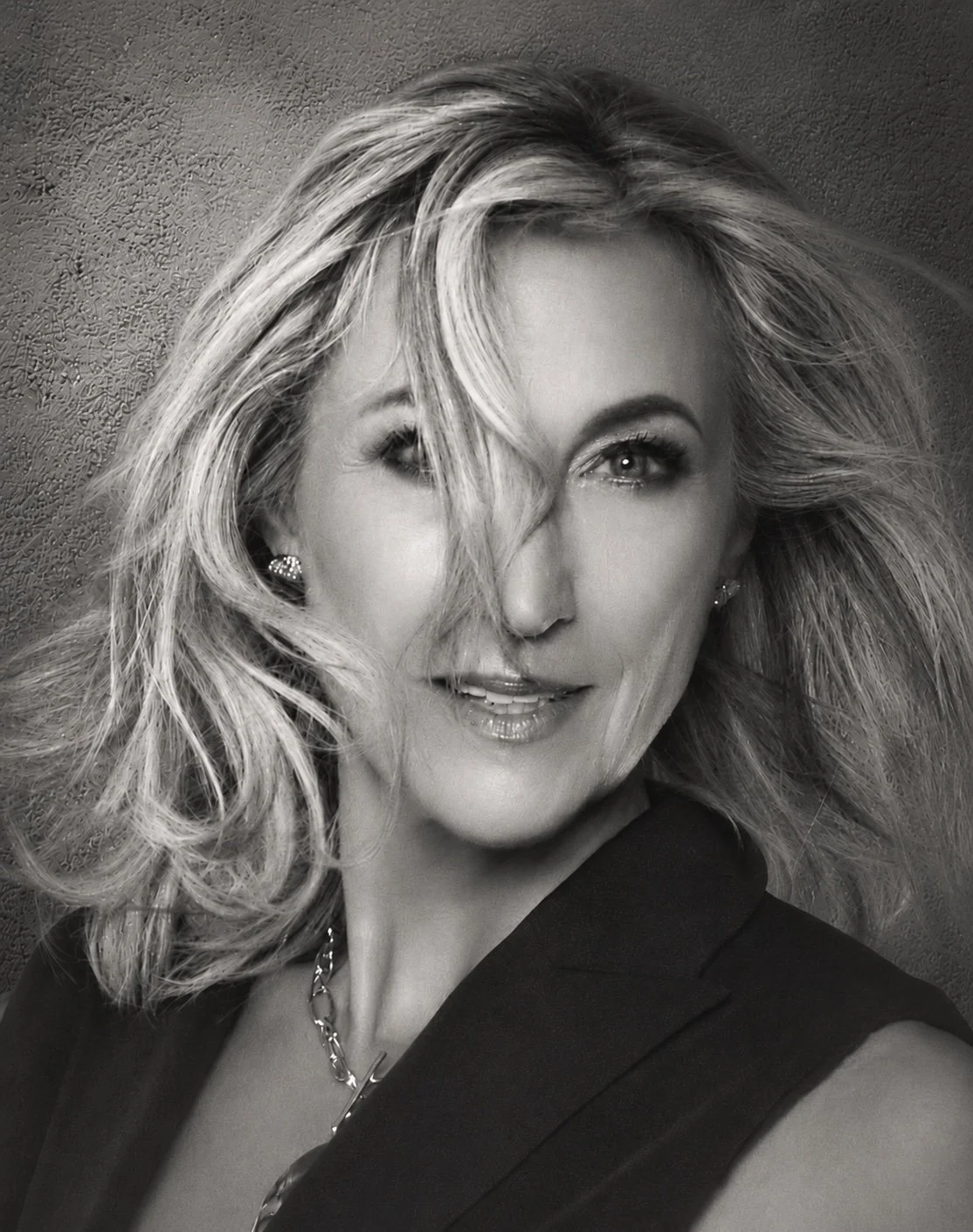
A lasting message
As the legendary Marianne Williamson beautifully reminded us, “ We ask ourselves, 'Who am I to be brilliant, gorgeous, talented, fabulous?' Actually, who are you not to be?...Your playing small does not serve the world. There is nothing enlightened about shrinking so that others won't feel insecure around you”
So here lies the ultimate behavioural challenge for the modern business landscape…
· An invitation for women to dismantle the high-performance mask,
· An imperative for organisations to stop confusing the presence of women in the room with the actual integration of their authority,
· And a roadmap for male allies to actively steward space.
We all have a distinct, vital part to play.
John F. Kennedy famously noted that "a rising tide lifts all boats." When we stop merely looking at women to fit into an outdated world, and instead start collectively leveraging, honouring, and recognising the brilliant, natural authority right in front of us, the entire ecosystem rises.
Strategy becomes sharper, cultures become safer, leadership carries true influence with gravitas.
So I leave all the wise and wonderful women reading this with one question:
What would change if you finally allowed yourself to be truly seen - and the world had the courage to honour what it saw?
My brand, my work and my mission are all collectively built around how we can honestly declare to ourselves and others:
I see you. I hear you. I honour you.
and…
‘Let’s leave nothing important unsaid’